
Shilajit’s growing popularity has unfortunately led to a surge of counterfeit products in the market. Adulterated shilajit often contains fillers, heavy metals, or synthetic compounds that offer no health benefits and may even pose risks. Knowing how to check shilajit purity protects your health and ensures you receive the genuine Ayurvedic benefits from your supplement.
Pure shilajit contains essential minerals, fulvic acid, and bioactive compounds that support energy, cognitive function, and overall vitality. Fake products simply cannot replicate these benefits. Fortunately, several simple tests can help you verify authenticity right at home before consumption.
Why Shilajit Purity Matters
The global demand for shilajit far exceeds natural supply, creating incentives for adulteration. Shilajit’s natural extraction process makes it susceptible to contamination with heavy metals, pesticides, and pollutants. Impure shilajit may contain tar, coal derivatives, or synthetic additives that compromise both safety and effectiveness.
Authentic shilajit undergoes rigorous purification processes and testing for heavy metals like lead, mercury, and arsenic. Products manufactured in GMP-certified, USFDA-approved facilities, such as Kapiva Himalayan Shilajit Resin, provide assurance of quality and safety through documented testing protocols.
How To Check Shilajit Purity: 6 Simple Tests
Performing these tests at home helps verify whether your shilajit is genuine before you consume it. Each method examines different properties of authentic shilajit resin.
Water Solubility Test
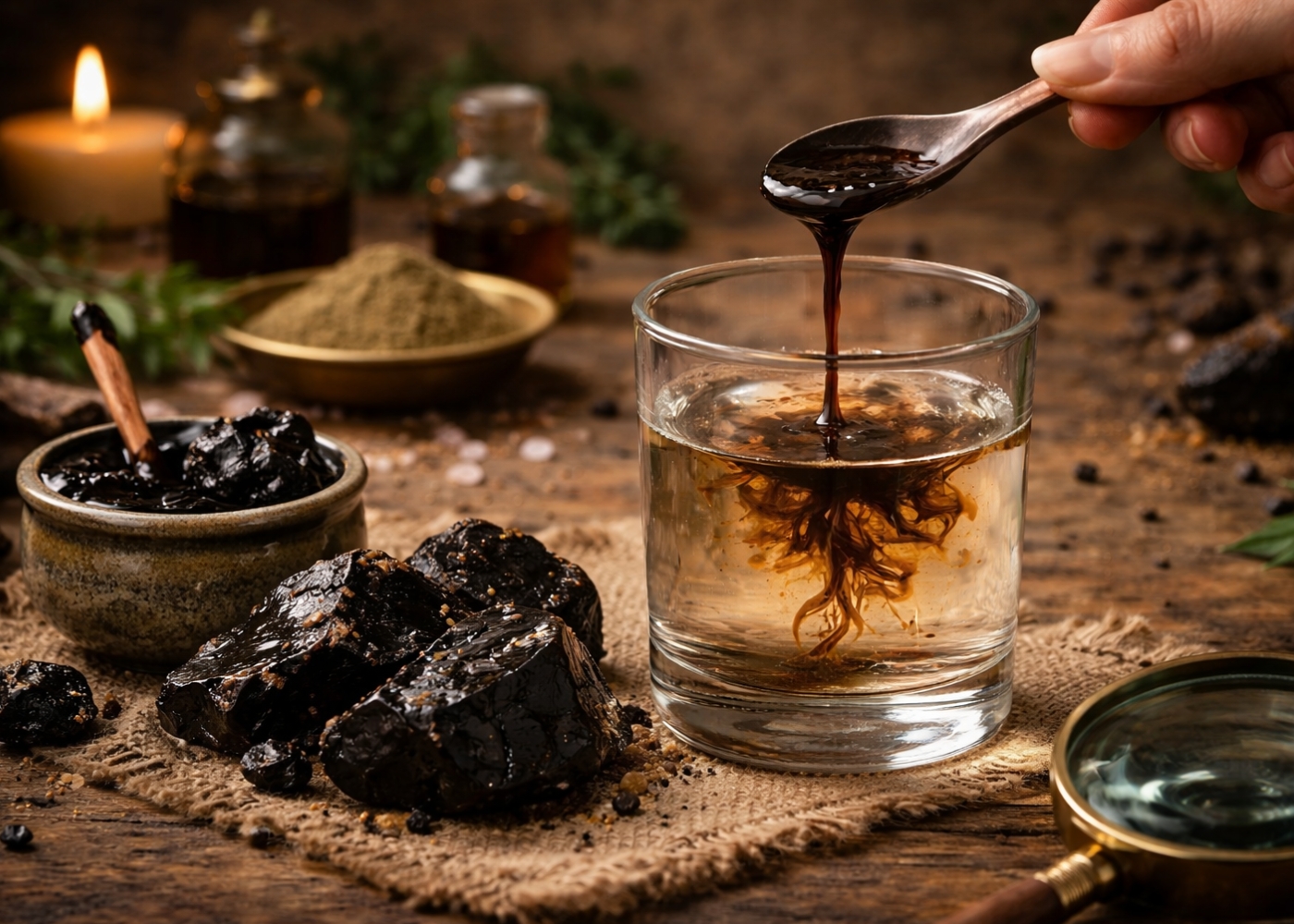
Drop a pea-sized amount of shilajit into a glass of warm water and stir gently. Pure shilajit dissolves completely within 5-10 minutes, turning the water a dark brown or golden-red color without leaving any residue. The solution should appear uniform with no floating particles or sediment at the bottom.
What fake shilajit does: Adulterated products form stubborn lumps, leave sandy or gritty residue, or float on the water’s surface. An oily film indicates the presence of tar or petroleum-based fillers.
Flame Test
Place a small piece of shilajit on a metal spoon and hold it over a lighter flame. Genuine shilajit softens and bubbles slightly due to moisture content, but it will not catch fire or produce smoke. When cooled, it returns to its original solid form without charring.
What fake shilajit does: Products containing plastic polymers, coal tar, or synthetic additives burn readily, produce visible smoke, and emit a chemical or petroleum-like odor. Never consume shilajit that fails the flame test.
Pliability Test
Hold a small piece of shilajit in your palm for 2-3 minutes. Authentic shilajit responds to body temperature, becoming soft, sticky, and pliable. When refrigerated, pure shilajit hardens and becomes brittle, even shattering like glass when struck.
What fake shilajit does: Counterfeit products remain hard regardless of temperature or become excessively soft and formless. Consistent texture across temperature changes indicates adulteration.
Taste And Smell Test
Authentic shilajit has a distinct, bitter, earthy taste with smoky undertones. The smell is pungent and mineral-rich, reflecting its origin from decomposed plant matter. Taste a tiny amount dissolved in water to assess authenticity.
What fake shilajit does: Sweet, metallic, or artificially flavored products indicate the presence of additives. A bland taste suggests dilution with fillers that reduce potency.
Visual Inspection
Examine your shilajit under natural light. Pure shilajit displays a glossy, resin-like appearance with colors ranging from dark brown to black. The texture should be smooth and consistent, not grainy or powdery.
What fake shilajit does: Dull, matte surfaces or inconsistent coloring suggest impurities. Products sold as powder or capsules often contain fillers and should be avoided when seeking pure resin form.
Verify Lab Certifications
Beyond home tests, always verify that your shilajit comes with third-party lab certifications. Reputable brands provide a Certificate of Analysis (COA) showing heavy metal testing results, fulvic acid content, and microbial contamination screening. Kapiva Shilajit Gold Resin is manufactured in USFDA-approved facilities with clinically tested ingredients, ensuring both purity and potency.
Red flags to watch: Missing sourcing details, no lab certifications, and suspiciously low prices indicate compromised quality. Authentic shilajit requires careful extraction and purification, which reflects in its pricing.
Conclusion
Understanding how to check shilajit purity empowers you to make informed purchasing decisions and protects your health from counterfeit products. Combining home tests with verification of lab certifications provides comprehensive assurance of authenticity. Pure shilajit delivers the energy, vitality, and wellness benefits documented in Ayurvedic traditions for thousands of years.
Kapiva’s shilajit range, formulated by experts at the Kapiva Academy of Ayurveda, undergoes rigorous testing for heavy metals and contaminants. For enhanced benefits, consider the Shilajit Gold Resin 40g enriched with Ashwagandha, Black Musli, and Swarnabhasma. Ayurveda takes 6 months to make big changes from within, so consistent use of pure, authentic shilajit delivers the best results.
Frequently Asked Questions
What Is The Most Reliable Way To Check Shilajit Purity At Home?
The water solubility test combined with the flame test provides the most reliable home verification. Pure shilajit dissolves completely in warm water and does not burn when exposed to flame. Performing both tests together gives a strong indication of authenticity.
What Is the Purest Form of Shilajit?
Shilajit in resin form is considered the purest and most potent. Powder and capsule forms often contain binders, fillers, or processing additives that dilute the product.
Why Does Pure Shilajit Smell Strong?
Authentic shilajit forms over centuries through decomposition of plant matter and minerals in high-altitude mountain crevices. The resulting pungent, earthy aroma reflects its rich organic composition.
How Can I Tell If Shilajit Has Gone Bad?
Pure shilajit has an extremely long shelf life when stored properly in a cool, dry place away from direct sunlight. Signs of spoilage include unusual mold growth, complete loss of characteristic smell, or failure to pass the pliability test.