
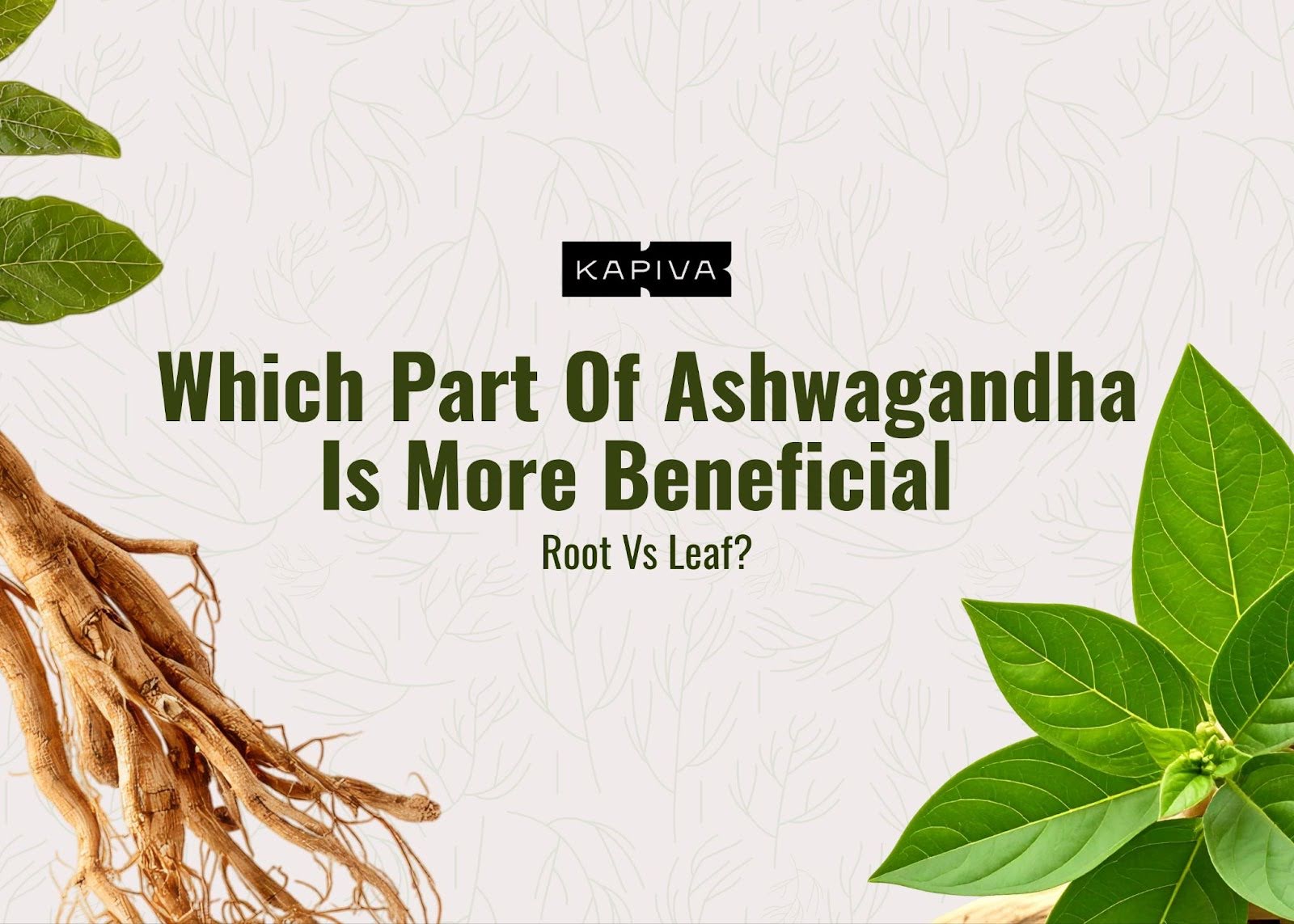
You’ve decided to try ashwagandha for stress, energy, or better sleep. But then you notice something confusing: some supplements use root extract, others use leaves, and some blend both. Does it actually matter which part of the plant you’re taking?
The short answer: yes, significantly. According to the Clinical Trials Registry of India, 73 out of 74 clinical trials on ashwagandha use root or root-based formulations. There’s a reason traditional Ayurveda has favored the root for over 3,000 years, and modern science now validates that ancient wisdom. Let’s explore what separates root from leaf and how to choose the right supplement for real results.
What Makes Root And Leaf Chemically Different?
The magic of ashwagandha lies in its withanolides, the bioactive compounds responsible for stress relief, cognitive support, and hormonal balance. But here’s what most people don’t realize: the types and concentrations of withanolides vary dramatically between plant parts.
Root Extract Contains:
Withanolide A, known for potent anti-inflammatory and neuroprotective effects. Research published in ScienceDirect shows withanolide-rich root extract reversed cognitive deficits in Alzheimer’s models. Roots also contain higher levels of Withanolide B, Withanolide D, and Withanoside VI, compounds extensively studied for stress reduction. As our guide to ashwagandha benefits explains, these compounds work synergistically to support your body’s stress response.
Leaf Extract Contains:
Higher concentrations of Withaferin A, a compound with cytotoxic properties. A PLOS One study found leaves possess several-fold higher withanolide content than roots. However, there’s a catch: Withaferin A is studied primarily for its cell-killing properties in cancer research, not for daily wellness supplementation.
Why Does Traditional Ayurveda Prefer The Root?
For 3,000 years, Ayurvedic practitioners have classified ashwagandha root as a premier Rasayana, a rejuvenating herb that promotes vitality from within. This wasn’t arbitrary.
The NIH Office of Dietary Supplements notes that most commercial supplements contain root extracts, and traditional use centers on the root’s adaptogenic properties. Ayurveda recognized that the root delivers sustained, balanced benefits without the intensity of leaf compounds.
Kapiva’s Ashwagandha Gold Capsules honor this tradition by using 183rd-day harvested Nagori Ashwagandha root, combined with Himalayan Shilajit and Gold Bhasma for enhanced efficacy.
Root Vs Leaf: How Do The Clinical Studies Compare?
When researchers test ashwagandha for stress, sleep, and cognitive benefits, they overwhelmingly choose root extracts.
For Stress And Anxiety:
A landmark study in the Indian Journal of Psychological Medicine used full-spectrum root extract at 300mg twice daily. Results: significant stress reduction and 27.9% decrease in serum cortisol after 60 days.
For Sleep Quality:
Research cited by the NIH found root extract at 600mg daily improved sleep onset, total sleep time, and sleep efficiency in participants with insomnia.
For Cognitive Function:
A 90-day study using sustained-release root extract showed significantly improved recall memory and reduced stress scores compared to placebo.
The Leaf Studies:
Research on leaf extracts primarily explores anti-cancer applications, not daily wellness. While leaves contain more withanolides overall, the specific compounds present make them less suitable for stress and vitality support.
The Safety Question: Why Root Is The Safer Choice
This is where the root vs leaf distinction becomes critical.
Safety research indicates Withaferin A, found in high concentrations in leaves, is cytotoxic. While interesting for cancer research, it raises questions for daily supplementation.
In contrast, clinical trials lasting up to 48 weeks show root extract at 500mg daily is well-tolerated with minimal side effects.
Want personalized guidance on ashwagandha dosage? Our Ayurvedic experts can help you find the right approach for your wellness goals.
Book A Free Consultation | Shop Ashwagandha Products
How To Choose A Quality Root-Based Supplement
Not all root extracts are created equal. Here’s what to look for.
Check The Source: Look for “root extract” on the label. Avoid products listing “aerial parts” or “whole plant” without specification.
Verify Withanolide Content: Quality extracts are standardized to 2.5-5% withanolides or higher. Kapiva’s Ashwagandha Gold Capsules use Nagori Ashwagandha, prized for its potent root composition.
Demand Third-Party Testing: Products manufactured in GMP-certified, USFDA-approved facilities meet global safety benchmarks with no harmful side effects.
What About Root And Leaf Combinations?
Some premium extracts like Sensoril and Shoden combine root and leaf to achieve higher withanolide concentrations. Studies using Shoden at just 60-120mg daily showed significant stress reduction.
The key: these branded extracts undergo rigorous processing to standardize beneficial withanolides while minimizing problematic compounds. For most people seeking stress relief and daily wellness, pure root extracts remain the gold standard.
Ready To Experience Authentic Ashwagandha?
Kapiva’s Ashwagandha Gold Capsules combine 183rd-day harvested Nagori Ashwagandha root with Himalayan Shilajit and Gold Bhasma. Formulated by experts at Kapiva Academy of Ayurveda and manufactured in USFDA-approved facilities, they deliver clinically tested ingredients with no harmful side effects.
Consult A Doctor | Explore Ashwagandha Range
FAQ
Q. Is Ashwagandha Root Better Than Leaf?
Ans. For daily wellness, stress relief, and sleep support, yes. 73 of 74 clinical trials use root extracts. Traditional Ayurveda and global pharmacopeias also recommend root for supplementation. Kapiva’s Ashwagandha Gold Capsules use premium Nagori root extract.
Q. What Part Of Ashwagandha Has The Most Withanolides?
Ans. Leaves contain more total withanolides, but the types differ. Roots have higher Withanolide A (beneficial for stress and cognition), while leaves have more Withaferin A (cytotoxic, studied for cancer research). For wellness supplementation, root withanolides are preferred.
Q. How Can I Tell If My Supplement Uses Root Or Leaf?
Ans. Check the label for “root extract” specifically. Avoid products listing only “ashwagandha extract” without specifying plant part. Quality products display withanolide percentage and manufacturing certifications.
Q. Are Root And Leaf Combination Extracts Safe?
Ans. Branded extracts like Sensoril and Shoden are processed to standardize beneficial compounds and are backed by clinical research. However, unprocessed combinations or products adding undisclosed leaf material should be avoided.
Q. What Dosage Of Root Extract Should I Take?
Ans. Clinical studies typically use 300-600mg of standardized root extract daily, often split between morning and evening doses. Start with 300mg and assess your response over 4-8 weeks.