
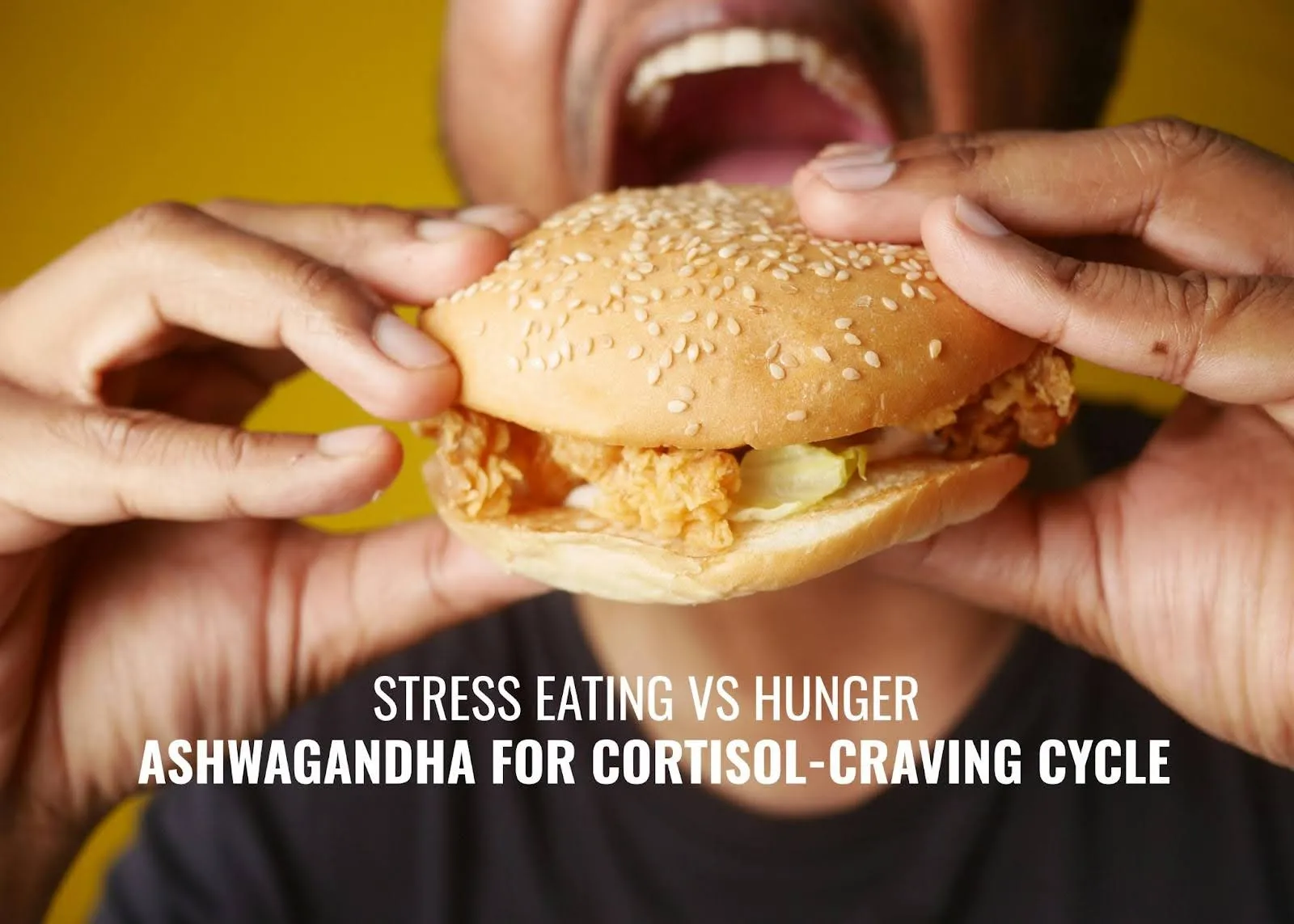
We’ve all been there, reaching for chips, chocolate, or that extra serving of dessert after a stressful day. It feels comforting at the moment, but soon after, guilt kicks in. If this pattern sounds familiar, you might be caught in what’s called the cortisol-craving cycle, when stress hormones trick your brain into eating even when your body doesn’t truly need food.
Let’s decode the difference between stress-driven hunger and genuine hunger, and explore how Ashwagandha, a clinically studied Ayurvedic herb, can help regulate cortisol levels and naturally curb those cravings.
Understanding Stress Eating vs Real Hunger
Before you can stop stress eating, it’s important to know what’s really happening in your body.
Real hunger is your body’s way of signaling it needs fuel. It builds gradually, and almost any food can satisfy it. Physical cues include:
- A growling stomach
- Low energy or slight dizziness
- Relief after eating almost any balanced meal
Stress eating, on the other hand, is emotional. It comes on suddenly, usually triggered by anxiety, exhaustion, or frustration, and you’ll crave very specific comfort foods like sweets, chips, or pasta. The hunger feels urgent, but it’s your mind seeking relief, not your stomach.
Learning to pause and ask, “Am I truly hungry or just stressed?” is the first step toward breaking the cycle.
How Cortisol Triggers Food Cravings During Stress
When you’re stressed, your body releases cortisol, the hormone responsible for your “fight or flight” response. While short-term stress is normal, chronic stress keeps cortisol levels elevated, confusing your hunger and metabolism.
Here’s what happens:
- Cortisol increases appetite, pushing your body to consume more calories for “energy.”
- It raises insulin, causing blood sugar dips that make you crave carbs or sugary foods.
- Over time, it trains your brain to associate eating with relief, creating a reward loop.
Modern life keeps us in constant “alert” mode, emails, deadlines, screens, and sleep deprivation all keep cortisol high. Unlike our ancestors who burned off stress through physical activity, today’s stress builds up, often leading straight to the fridge.
Why Your Body Craves Specific Foods When Stressed
Ever wonder why it’s always sugar, salt, or carbs when stress hits? That’s not random — it’s biochemical.
- Sugar gives a quick dopamine hit, improving your mood temporarily.
- Refined carbs boost serotonin, the “feel-good” hormone, helping calm anxiety for a short while.
- Fats and salt trigger the brain’s reward center, creating comfort.
The problem? This relief is short-lived. After the initial rush, your blood sugar crashes, cortisol spikes again, and the cycle repeats, leaving you tired, moody, and craving more.
Natural Ways to Break the Stress Eating Cycle
Breaking stress eating isn’t about willpower, it’s about balancing your stress response.
Here are natural ways to start:
- Practice mindful eating: Take slow bites and identify real hunger cues.
- Check your emotional triggers: Keep a stress journal to recognize when emotions drive your eating.
- Stay hydrated: Dehydration often mimics hunger, increasing cravings.
- Add movement: Light exercise like yoga or walking reduces cortisol naturally.
- Don’t skip meals: Skipping meals causes blood sugar dips, making stress eating more likely later.
Opinion: Willpower alone isn’t enough. You must address the root cause, cortisol imbalance. That’s where adaptogenic herbs like Ashwagandha can make a real difference.
How Ashwagandha Helps Control Cortisol and Cravings
Ashwagandha, a renowned Ayurvedic adaptogen, has been extensively studied for its stress-regulating and cortisol-lowering effects. It helps restore hormonal balance, making it easier to differentiate between true hunger and emotional cravings.
Here’s how it works:
- Reduces cortisol levels: Studies show daily Ashwagandha intake can lower cortisol by up to 27%, helping regulate stress-related appetite.
- Balances energy: It prevents the exhaustion-craving cycle by stabilizing blood sugar and improving resilience to stress.
- Improves mood and sleep: Better sleep reduces emotional eating triggers and enhances self-control.
A clinical trial published in The Journal of Clinical Psychopharmacology found that individuals taking Ashwagandha reported less stress, lower cortisol, and reduced cravings within four weeks.
If stress eating feels like a daily struggle, consider Kapiva Ashwagandha Stress Care Capsules. They contain 100% root-derived Ashwagandha standardized to 5% withanolides, along with Tulsi, Brahmi, and Mandukparni, which help:
- Manage cortisol and stress-related anxiety
- Improve sleep quality naturally
- Support mood and cognitive balance
Taking it 2 times daily after breakfast and after dinner can help reset your body’s response to stress, reducing the emotional drive behind food cravings.
Simple Strategies to Manage Stress Without Food
When cravings strike, try these quick resets instead:
- Deep breathing: 5 minutes of slow, mindful breathing can reduce cortisol almost instantly.
- Take a short walk: Physical activity lowers stress hormones and improves mood.
- Sip herbal tea: Tulsi or chamomile tea helps relax the mind.
- Use grounding techniques: Engage your senses, focus on sounds, smells, or textures to shift your focus from food.
- Prioritize rest: Even one night of poor sleep can raise cortisol levels by 30%.
Over time, combining Ashwagandha supplementation with these simple habits helps retrain your stress response, reducing emotional hunger triggers altogether.
When to Seek Additional Support for Stress Eating
If your stress eating is affecting your health, sleep, or emotional well-being, it might be time to seek support.
Consider professional help if you:
- Find yourself eating unconsciously or hiding eating habits
- Experience guilt or anxiety after eating
- Struggle to manage stress despite lifestyle changes
Therapists trained in cognitive behavioral therapy (CBT) can help you identify triggers and reshape thought patterns. Ayurvedic practitioners may also suggest herbal and diet-based approaches that complement your emotional healing.
FAQs
Q: How can I tell if I’m stress eating or actually hungry?
A: Real hunger builds gradually and can be satisfied with various foods. Stress eating comes on suddenly, craves specific comfort foods, and often happens after emotional triggers.
Q: How long does it take for Ashwagandha to reduce cortisol levels?
A: Most studies show cortisol reduction within 2–4 weeks of consistent Ashwagandha use, though some users report feeling calmer within a week.
Q: Can stress eating cause weight gain even with exercise?
A: Yes, because stress eating often involves high-calorie comfort foods, and elevated cortisol promotes fat storage, especially around the belly.
Q: What foods should I avoid when I’m stressed?
A: Limit refined sugars, processed snacks, and caffeine, as they amplify cortisol fluctuations and trigger rebound cravings.
Q: Is it normal to crave carbs when stressed?
A: Completely normal, carbs raise serotonin levels, which temporarily counter stress. The key is to manage the underlying stress, not just the craving.
Q: How much Ashwagandha should I take for stress eating?
A: Research suggests 300–600mg daily. Kapiva Ashwagandha Stress Care Capsules are formulated within this range, offering optimal stress support.
Q: Can I stop stress eating without addressing my stress levels?
A: Short-term, perhaps. But long-term results require tackling the root cause, high cortisol and chronic stress.